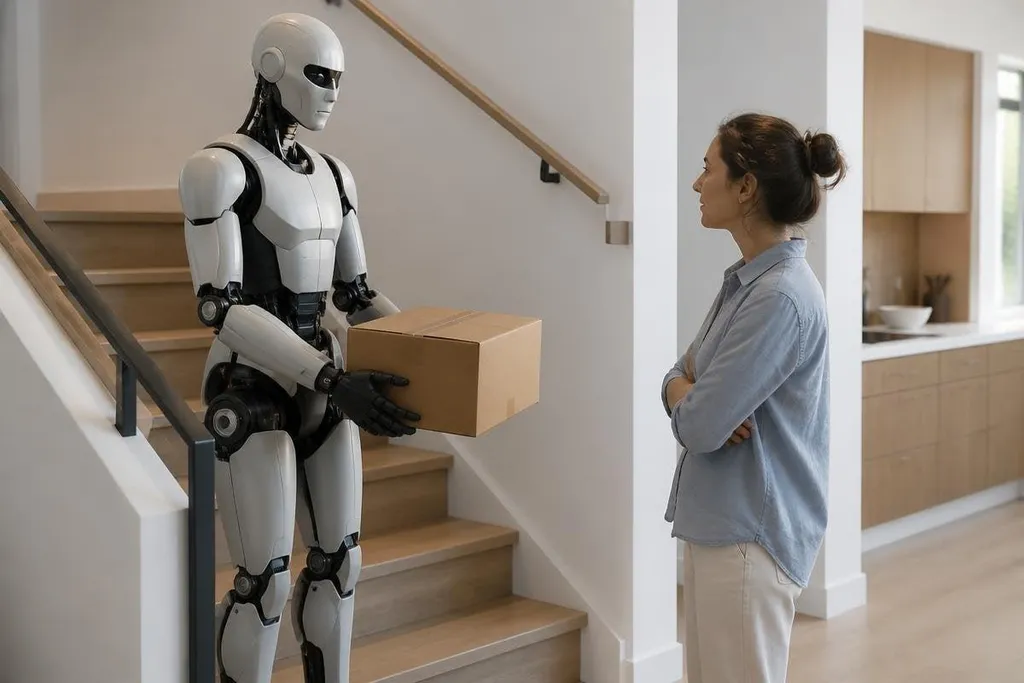
With a human-shaped body, a robot could use stairs, doors, tools, and work areas built for people. The harder change comes when it also speaks, watches faces, and moves in ways people read as familiar.
Quick read
- Human-shaped bodies can fit spaces built for people.
- Human-like speech may make a robot seem more capable than it is.
- Safe use will depend on clear limits, easy stops, and visible records.
The body changes where a robot can work
A humanoid robot has a head, torso, arms, and legs arranged in a familiar way. That layout can help it reach shelves, turn handles, climb stairs, or use hand tools without a site being rebuilt around a special machine.
The trade-off is mechanical. A two-legged robot must keep its balance as it walks, turns, lifts, and reacts to a person nearby. Balance needs cameras, force sensors, motors, and software that can respond before a small movement becomes a fall.
A human-shaped body also brings limits that a wheeled robot avoids. Legs use energy to stay upright, feet can slip, and a fall can damage the robot or the object it carries. For many factories, a wheeled platform with a simple arm may remain the safer and cheaper choice.
Human-like behavior changes how people react
When the robot speaks in a calm voice and turns toward you, it can feel easier to use than one that shows only lights and error codes. That feeling may help with training, but it can also make people trust the robot beyond what its sensors and software support.
Speech does not prove understanding. The robot can answer a question from a fixed set of responses, repeat a warning, or ask for help without knowing why a task failed. Its voice may sound certain even when its view is blocked or its grip is weak.
That gap matters in a warehouse, hospital, or home. A person may step closer, hand over an object, or enter a robot's work area because the machine appears aware of them.
A human-like voice or posture can hide a basic failure: the robot may not know what a person is doing. The demo should state what the robot sensed, what action it chose, and when a person could stop it. A dated report from Robot 24 can place those details beside the company’s claim before the discussion turns to the data those human cues create.
The data problem grows with the human cues
Human-like robots need more than movement data. Cameras may record rooms and faces, microphones may pick up speech, and touch sensors may record contact with objects or people.
That data can help a robot tell a person from a box, or a handoff from an accidental bump. It also raises plain questions: where does the data go, who can view it, how long is it kept, and can a worker refuse recording?
The robot's shape matters here because people may treat it like a person in the room. They may speak freely near it or assume that a private conversation stays private. A machine needs visible recording signs and clear rules, not a friendly face as a substitute for consent.
The other limit is accountability. If a robot gives bad directions, drops a load, or blocks an exit, a company must be able to review the event. Logs should show sensor readings, commands, operator input, and the software version that ran at the time.
A practical decision guide
Before putting a human-like robot near workers or the public, check these points:
- Match the shape to the job. Use legs only where stairs, doors, or human tools make them useful.
- Mark the limits. State the robot's payload, speed, reach, battery time, and safe operating area.
- Show the robot's state. Use lights, screen text, or sound to signal movement, recording, low power, and faults.
- Keep a physical stop. Put an emergency stop where a nearby worker can reach it without entering the robot's path.
- Review the records. Set a retention period for camera, microphone, contact, and operator data before the first shift.
- Test failure cases. Check blocked cameras, weak grips, lost network links, low battery, and a person stepping into the work area.
I'd judge a human-like body by the work it makes safer or easier, not by how well it copies a person. A machine that looks familiar but hides its limits creates a harder problem than one that looks plainly mechanical.
The useful next step is narrow: give the robot one task, publish its limits, and measure what happens when the task goes wrong. The open question is how much human behavior a robot should copy before the extra trust causes more risk than the familiar form removes.